

 Factoring Support
Factoring Support Services in a Shifting Credit Landscape

June 25, 2026
|


Content
Factoring has become one of the most dynamic segments of alternative finance as more businesses look for ways to unlock working capital from their receivables.
Rising interest rates, selective bank lending, and stricter underwriting have pushed many firms toward invoice‑based funding and flexible liquidity solutions.
In this environment, factoring companies are no longer judged only by access to capital.
They are evaluated on speed of approval, consistency of execution, transparency of risk management, and overall client experience.
As portfolios grow and become more complex, operations teams must handle higher volumes of applications, diversified debtor bases, and increasing expectations from clients, investors, and regulators.
This is where specialized factoring support services become strategic: they provide the scalable, process‑driven backbone that allows factors to keep pace with demand while protecting margins and credit quality.
Learn more about how factoring works in corporate finance.
The Credit Market Shift and What It Demands from Factors
The current credit cycle is characterized by caution and heightened scrutiny.
Many traditional lenders have tightened exposure to smaller and mid‑market borrowers, creating a larger opportunity set for factoring companies—but also raising the bar on how those portfolios are managed.
For factoring teams, that means:
- More applications to assess and onboard.
- More debtors, sectors, and geographies to analyze.
- More frequent, detailed reporting to capital providers and stakeholders.
- Closer attention to fraud, documentation quality, and payment behavior.
Stakeholders now expect clear answers to questions such as:
- How are limits set and monitored?
- How is concentration risk managed?
- How are disputes and exceptions tracked to resolution?
Meeting these expectations is not simply a matter of hiring more staff.
It requires clearly defined workflows, role clarity, and a deliberate use of technology so that decisions are consistent, auditable, and explainable.
Factoring support services are designed to help build this discipline.
By standardizing how work flows from application to cash allocation, they make operations more predictable and more resilient when credit conditions tighten.
(For readers who want deeper context on credit cycles and non‑bank funding, you can add an outbound research link here, for example to a neutral report or explainer on the role of factoring in SME finance.)
The Operational Burden Behind Every Factored Invoice
Each funded invoice represents a chain of operational tasks that must be completed accurately and on time.
Typical activities include:
- Reviewing client applications and onboarding documentation.
- Validating customer and debtor details.
- Verifying invoices, purchase orders, and proof of delivery.
- Setting up data in the factoring platform and related systems.
- Monitoring payments, disputes, and chargebacks.
- Coordinating communication between clients, debtors, and internal teams
When these activities are scattered across email threads, spreadsheets, and informal checklists, several problems emerge:
- Work is duplicated, lost, or delayed.
- Exceptions are handled inconsistently.
- Management has limited visibility into true cycle times and bottlenecks.
Factoring support services address this by organizing work into structured, repeatable workflows.
Information flows cleanly from one step to the next, with clear handoffs and status tracking, so that funded invoices reflect a controlled, well‑documented process rather than ad hoc efforts.
The Strategic Value of Specialized Factoring Support
Modern factoring support is not simply a back‑office add‑on—it is a strategic lever that influences growth capacity, risk, and profitability.
Specialist teams bring domain knowledge of factoring workflows and platforms, along with proven methods for documenting and improving processes over time.
1. Cost Efficiency and Margin Protection
In a tight credit market, funding costs are higher and pricing is under pressure.
Without efficient operations, margins can erode quickly.
Specialized support services help by:
- Eliminating redundant steps and rework.
- Ensuring that data is captured correctly the first time.
- Aligning staffing levels with workload peaks and troughs.
The result is lower unit cost per transaction and more predictable operating leverage.
Margins become easier to defend because operational effort is directed toward activities that genuinely add value—such as better debtor analysis or faster response to client requests.
2. Elastic Capacity for Growth
Factoring portfolios rarely grow in a straight line.
New industries, new territories, and new product variations all introduce fresh requirements and volume spikes.
A support model built around clearly defined workflows and flexible capacity enables factoring companies to:
- Absorb sudden increases in application volume.
- Launch new offerings without over‑stretching existing staff.
- Pilot new risk or product strategies without committing to permanent headcount too early.
This elasticity lets leadership pursue growth opportunities with greater confidence, even when the macro environment is uncertain.
3. Stronger Risk and Compliance Discipline
Risk and compliance expectations are rising across the financial sector.
For factoring companies, this translates into greater scrutiny of documentation standards, KYC/AML practices, limit management, and portfolio reporting.
Factoring support services help embed these controls directly into daily workflows:
- Critical checks and approvals are defined, sequenced, and tracked.
- Exceptions are logged and resolved through standard procedures.
- Audit trails show who did what, when, and based on which data.
This creates a more consistent application of policy and makes it easier to demonstrate control to investors, auditors, and regulators.
4. Better Use of Technology, Platforms, and Data
Many factoring firms rely on multiple systems: core factoring platforms, CRM, accounting tools, and analytics or BI layers.
Without structured support, data becomes fragmented and reporting is slow or incomplete.
Specialized support teams help by:
- Defining where each piece of data should live.
- Ensuring consistent data entry and reconciliation across platforms.
- Building or maintaining operational dashboards that track throughput, cycle times, and exceptions.
With this foundation, leaders gain a clearer view of what is happening in the portfolio: which clients consume the most effort, where delays occur, and which debtor segments behave differently from expectations.
Choosing the Right Factoring Support Partner
Selecting a factoring support provider is a strategic decision that shapes both day‑to‑day operations and long‑term scalability.
Beyond basic capacity, the most effective partners bring a combination of domain expertise, process maturity, and cultural fit.
Key considerations include:
- Proven experience with end‑to‑end factoring workflows and platforms.
- Strong information security and data protection practices.
- A clear methodology for process documentation, performance metrics, and continuous improvement.
- Transparent communication, collaborative working style, and alignment with your client‑service expectations.
Organizations such as Invensis offer comprehensive factoring support services spanning credit verification, document handling, transaction processing, collections follow‑up, reconciliation, and management reporting.
This allows internal teams to focus on strategy, relationship management, and portfolio design, while day‑to‑day operations run on a structured, well‑governed foundation.
Positioning for the Next Phase of the Credit Cycle
Credit cycles will continue to change—but the need for operational resilience will not.
Factoring companies that can maintain consistent service levels under pressure, adapt to new risk conditions, and respond quickly to client needs will be best placed to grow.
Factoring support services contribute to this resilience by making operations more transparent, more flexible, and easier to govern.
Instead of responding to each challenge with short‑term workarounds, leaders can build a stable operational base from which to:
- Launch new products or programs.
- Enter new sectors or geographies.
- Adjust risk appetite and pricing with confidence.
Over time, a strong operations model becomes part of a factor’s competitive identity.
Clients and funding partners learn that service levels, communication, and execution will remain reliable—even when market conditions are volatile.
The Power of Parallel AI and Human Expertise
The most effective support models combine AI capabilities and human judgment in parallel, rather than forcing a choice between them.
Each is assigned to the type of work it performs best.
AI tools can:
- Classify and extract data from invoices and supporting documents.
- Flag unusual payment patterns or concentration risks.
- Automate reminders and status updates for routine transactions.
Human specialists are strongest when:
- Interpreting complex or ambiguous situations.
- Handling sensitive client and debtor conversations.
- Making nuanced decisions where context matters more than rules.
When these strengths are integrated into a unified workflow, AI prepares and enriches the work while people focus on insight, decision‑making, and relationship management.
For factoring firms, this parallel approach can lead to faster response times, more consistent outcomes, and better use of scarce expert capacity.
Factoring support services that deliberately orchestrate AI and human expertise in this way turn operations into an adaptive system capable of handling both routine volume and complex exceptions.
Taking the Next Step
If you are leading a factoring business in today’s tightening credit environment, now is the time to reassess how your support processes run.
A well‑designed support model can help you align people, process, and technology so that growth, risk control, and client experience all move in the same direction.
Invensis is uniquely positioned to help factoring companies modernize their support operations in a tightening credit environment.
By designing and running a structured support model, Invensis aligns people, processes, and technology so that growth, risk control, and client experience all move in the same direction.
Through a Parallel model that combines AI‑driven automation with experienced factoring specialists, Invensis helps factors build operations that are efficient today and ready for the next phase of the credit cycle.
To explore how this could work for your organization, get in touch with the Invensis team
Frequently Asked Questions
What is factoring in finance?
Factoring is a financial transaction in which a business sells its accounts receivable (invoices) to a third party—known as a factor—at a discount in exchange for immediate cash.
It is widely used by businesses that have strong receivables but limited access to traditional bank credit and want to improve working capital.
What are the two main types of factoring services?
The two principal types are recourse factoring and non‑recourse factoring.
In recourse factoring, the client remains responsible if the debtor does not pay.
In non‑recourse factoring, the factor assumes the credit risk of debtor non‑payment, usually for a higher fee.
What is a credit market?
A credit market is the part of the financial system where borrowers obtain funds from lenders and investors through instruments such as loans, bonds, mortgages, and money market securities.
It includes activity from banks, non‑bank financial institutions, and capital market participants.
What are the four main credit market instruments?
The four traditional types are:
1. Simple loans
2. Fixed‑payment loans
3. Coupon bonds
4. Discount bonds
Each has a distinct pattern of principal and interest payments and is priced based on yield, maturity, and perceived credit risk.
How do factoring support services improve operational efficiency?
Factoring support services standardize key workflows, including onboarding, verification, transaction processing, collections, and reporting.
By reducing manual rework, improving data quality, and aligning capacity with demand, they help factoring companies achieve faster cycle times, clearer visibility, and more consistent outcomes across the portfolio.
.webp "Medium")
Kristen is an experienced professional in the factoring support industry, bringing a wealth of knowledge and expertise to her writing. With years of hands-on experience, she adeptly navigates the intricacies of factoring operations. Kristen's proficiency extends across diverse sectors, consistently providing valuable insights and delivering effective solutions. She excels in client onboarding, streamlining invoice processing, and implementing robust risk management strategies. As a prominent writer in the factoring support space, Kristen's expertise shines through in her concise and actionable guidance, empowering businesses to optimize their cash flow and achieve long-term financial stability.
Discover Our Full Range of Services
Click HereExplore the Industries We Serve
Click HereBlog Category
Related Articles
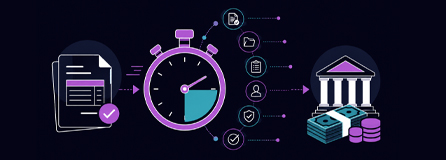
How quickly they turn invoices into cash, we break down what really happens inside the invoice validation clock
June 25, 2026
|

A practical guide for factors to identify invoice fraud, strengthen invoice validation, and protect funding decisions.
June 25, 2026
|

Fix enterprise finances using smart factoring and AI-human collaboration.
June 25, 2026
|
Services We Provide
Industries We Serve
